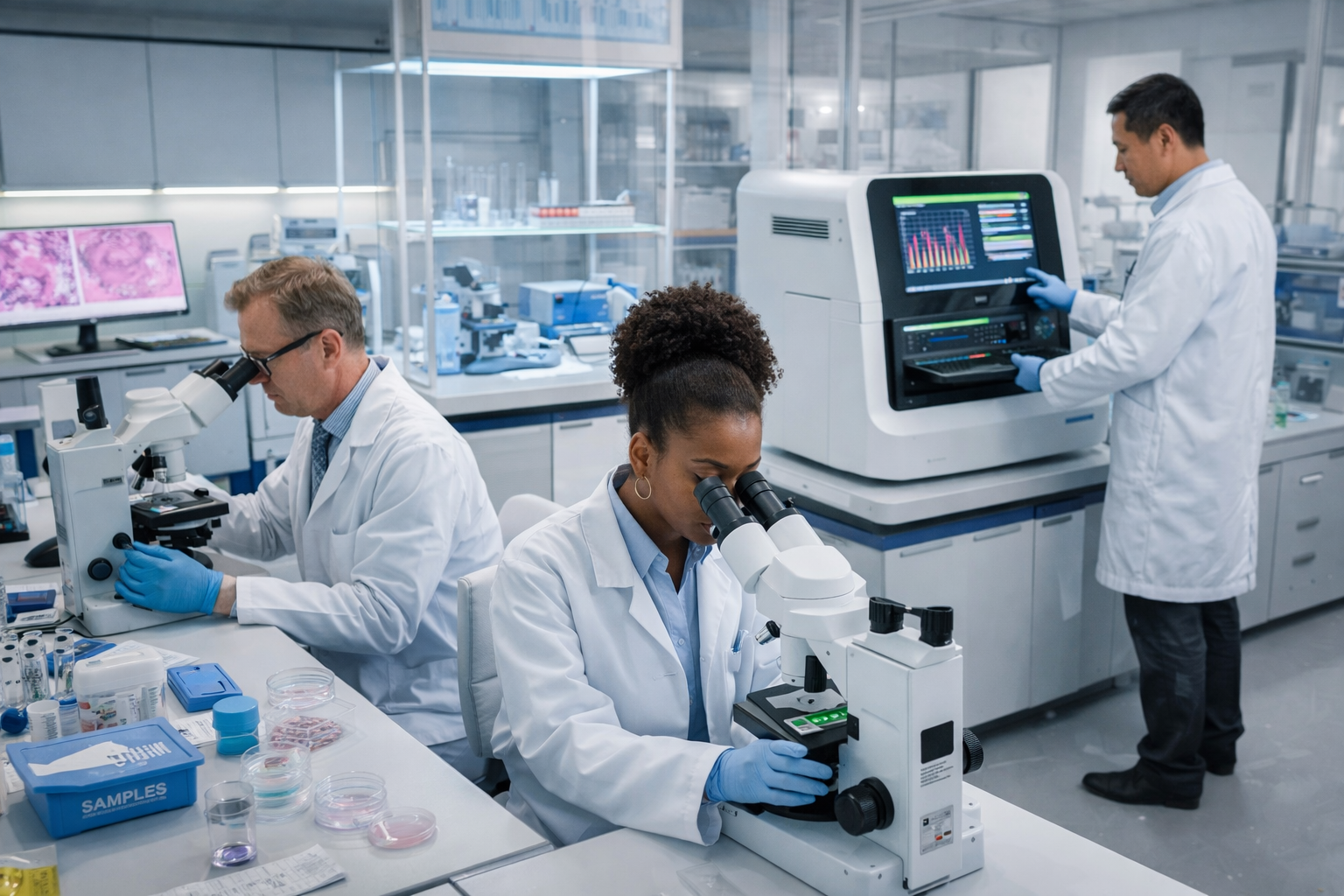
When a biopsy is taken, most hospitals preserve tissue using FFPE (Formalin-Fixed Paraffin-Embedded). FFPE is widely used for diagnosis, but the chemical fixation process can damage or degrade critical molecular material—especially RNA and proteins—and it eliminates the viability of living tumor cells, which limits what modern precision testing can do later. (specicare.com)
That limitation matters because in many real-world settings, first-line cancer treatments still don’t work for a large share of patients—often hovering around the ~40–50% response range depending on cancer type and therapy. (PMC)
When the first plan fails, time is lost, side effects stack up, and your next options may depend on whether your tissue was preserved in a way that still supports advanced testing.
SpeciCare is built around a simple idea: preserve live tumor tissue now, so you’re not locked out of better answers later. Cryopreseriovatn is designed to maintain tissue in a state that’s more compatible with advanced precision approaches—like functional testing, organoid work, clinical vaccine pathways, and trial readiness. (specicare.com)
And here’s the surprising part: for less than $900, you can initiate professional-grade cryopreservation and start secure storage—so your options are preserved long-term. (specicare.com)

A cancer diagnosis can make you feel powerless. Tissue ownership gives you back control. SpeciCare’s patient experience includes legal documentation to help you gain control of your tissue, plus Patient Advocate support to coordinate logistics when you or your care team need to use it. (specicare.com)