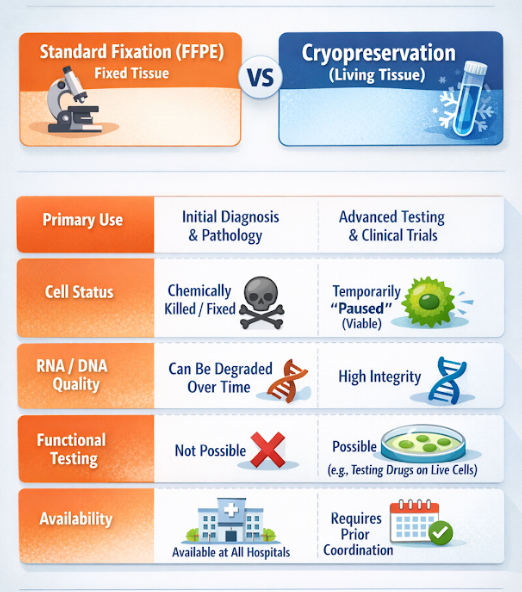
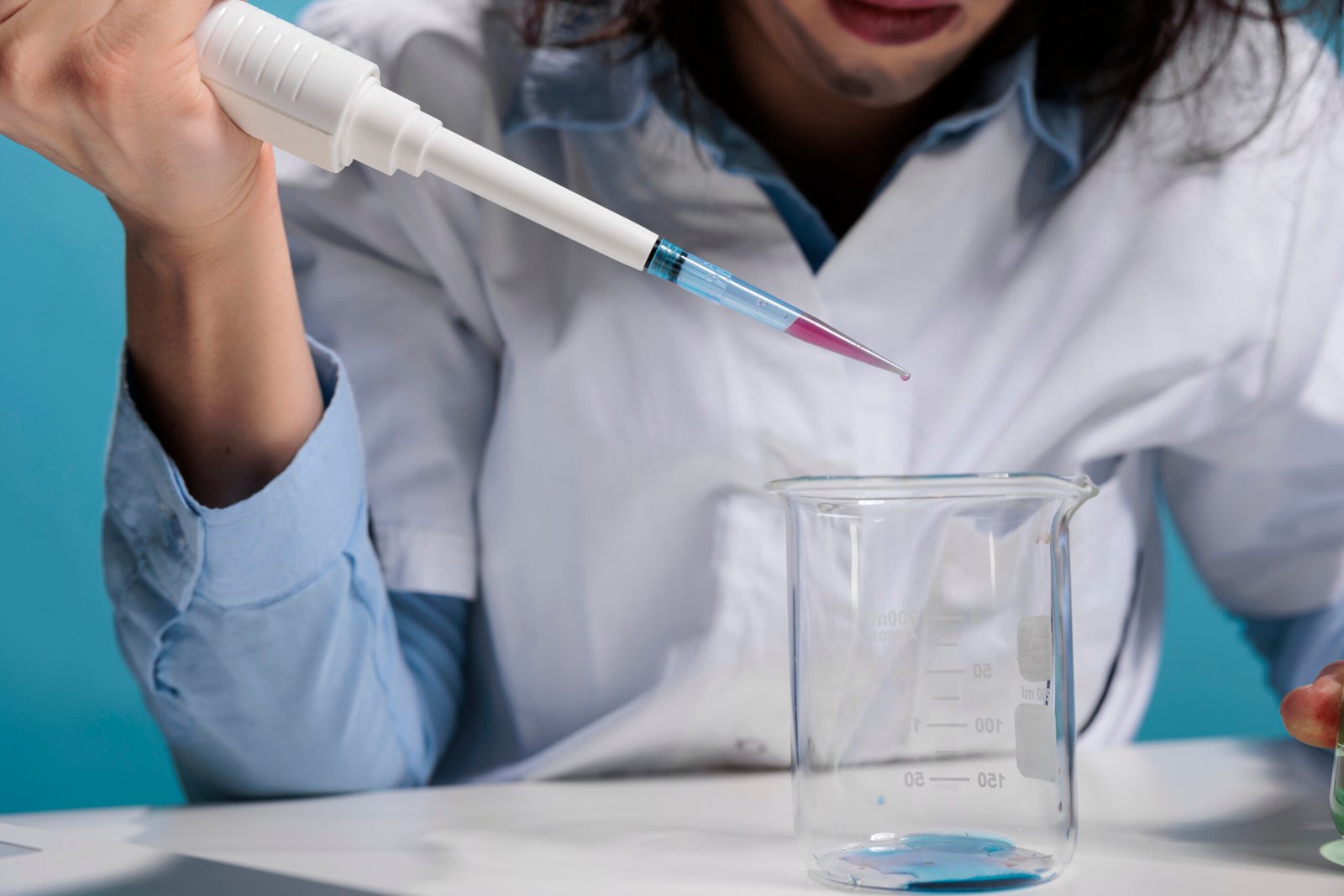
Tissue Cryopreservation preserves tumor tissue at ultra-low temperatures so it can remain useful for future testing, evolving therapies, and clinical trial opportunities—without needing another biopsy later.
is the controlled freezing and long-term storage of tumor tissue (and sometimes blood) at extremely low temperatures. In plain English: it’s the difference between saving the original source file of your tumor vs. being stuck with a limited snapshot later.
because cancer care is changing fast—and the tissue you preserve today can influence what becomes possible months or years from now.
Most patients assume the biopsy is “just for diagnosis.” But how tissue is handled can impact what testing is even possible later. If future treatment decisions depend on additional analysis, a preserved sample can help prevent the “we wish we had more tissue” moment.
This is a strong fit if you:
No. Diagnosis still happens through standard medical processes. Cryopreservation is about preserving future optionality.
Cryopreservation planning is best done before tissue is collected so it’s handled appropriately at the start.
Long-term storage is the point—many patients store for years as new options emerge.

Tissue Cryopreservation preserves tumor tissue at ultra-low temperatures so it can remain useful for future testing, evolving therapies, and clinical trial opportunities—without needing another biopsy later.
is the controlled freezing and long-term storage of tumor tissue (and sometimes blood) at extremely low temperatures. In plain English: it’s the difference between saving the original source file of your tumor vs. being stuck with a limited snapshot later.
because cancer care is changing fast—and the tissue you preserve today can influence what becomes possible months or years from now.
Most patients assume the biopsy is “just for diagnosis.” But how tissue is handled can impact what testing is even possible later. If future treatment decisions depend on additional analysis, a preserved sample can help prevent the “we wish we had more tissue” moment.
This is a strong fit if you:
No. Diagnosis still happens through standard medical processes. Cryopreservation is about preserving future optionality.
Cryopreservation planning is best done before tissue is collected so it’s handled appropriately at the start.
Long-term storage is the point—many patients store for years as new options emerge.