
AI-Powered Cancer Care
Why Forward-Thinking Patients Are Demanding Precision Testing Before Treatment
The statistics are sobering: approximately 50% of first-time cancer treatments fail. After months of grueling chemotherapy, radiation, or targeted therapy, half of all patients discover their protocol didn’t work—precious time lost, their bodies weakened, and their cancer potentially more resistant to future treatments.
But here’s what most oncologists won’t tell you upfront: we now have the technology to dramatically improve those odds before you ever start treatment.
The AI Revolution Is Rewriting Cancer Treatment Protocol
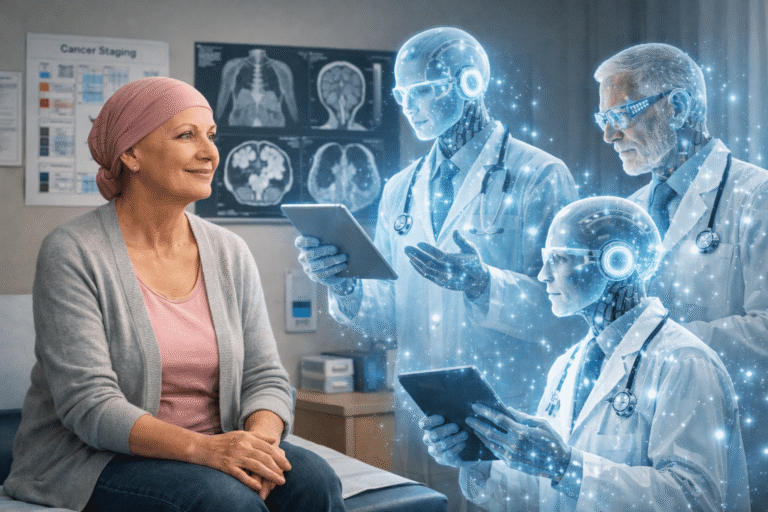
Artificial intelligence is transforming cancer care from educated guesswork into precision medicine. As we head into 2026, AI-powered platforms are analyzing genomic data, predicting treatment responses, and identifying optimal drug combinations with unprecedented accuracy—but only if patients have preserved the biological material needed for these advanced tests.
The patients seeing 2x, 3x, even 4x better outcomes aren’t necessarily getting different drugs. They’re getting the right drugs from the start—and they’re using AI-enhanced testing to find them.
Why Traditional “Standard of Care” Is Failing Half of All Patients
Traditional oncology follows a reactive model: try the standard protocol for your cancer type, wait 8-12 weeks to see if it works, then pivot to second-line treatments if it fails. This approach made sense 20 years ago when we had limited testing options.
Today, it’s inexcusable.
Modern genomics testing can analyze your specific tumor’s genetic mutations, identifying which of the 300+ FDA-approved cancer treatments are most likely to work before you start therapy. AI algorithms can process this genetic data against millions of patient outcomes to predict response rates with remarkable accuracy.
But here’s the catch: these tests require viable tumor tissue—and most patients lose access to their biopsy samples immediately after diagnosis.
The Tissue Preservation Crisis No One Is Talking About
When you undergo a cancer biopsy, that tissue is typically used for basic pathology (determining cancer type and stage), then either exhausted through testing or stored improperly for future analysis. Within months, most biopsy samples become unusable for advanced genomic testing, clinical trial enrollment, or emerging AI-powered diagnostic platforms.
Some may even call this, medical malpractice by negligence.
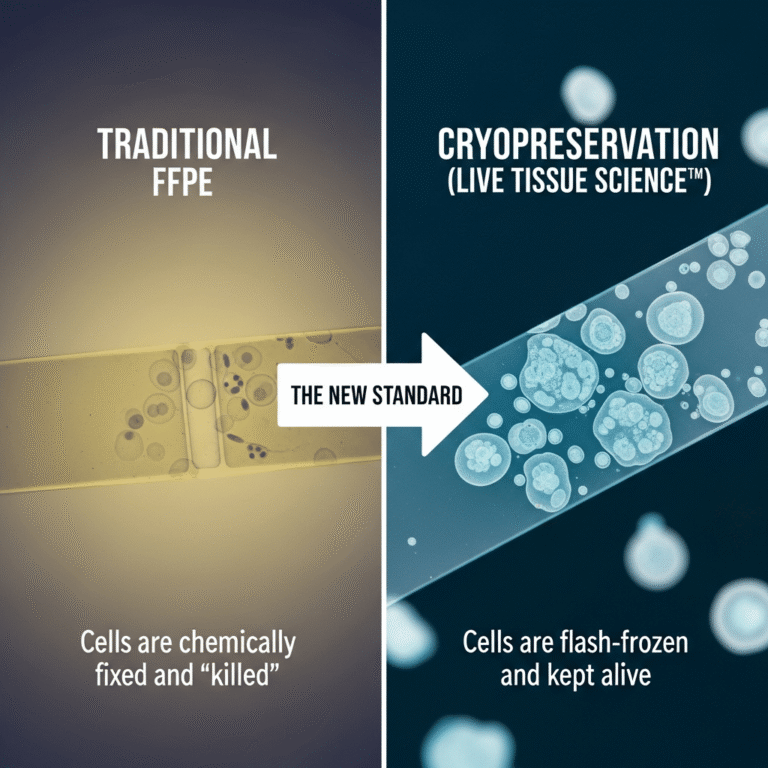
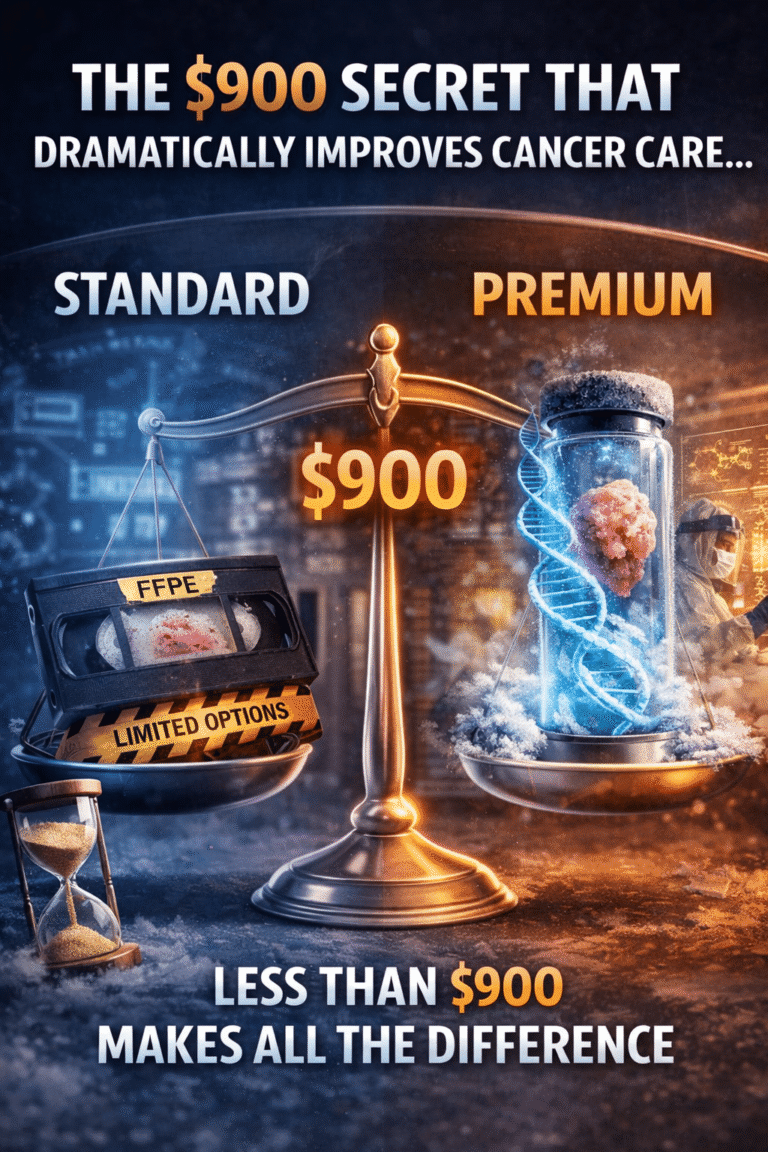
Cryopreservation—ultra-cold tissue preservation—maintains your biopsy in pristine condition, available for:
- Genomic sequencing and mutation profiling to identify precision treatment targets
- Live cell drug sensitivity testing that exposes your actual cancer cells to different medications to see which ones kill them most effectively
- Clinical trial matching as new therapies emerge (trials often require fresh tissue analysis for enrollment)
- AI-enhanced treatment prediction models that require high-quality genetic data
- Future treatment planning if first-line therapy fails or cancer recurs
Without preserved tissue, you’re locked out of these options. With it, you’ve given yourself every possible advantage.
How Pre-Treatment Testing Changes Everything
Imagine knowing before your first chemotherapy infusion that Drug A has a 73% probability of response in your specific tumor genetics, while Drug B (the “standard” option) has only 31% effectiveness for your mutation profile.
This isn’t science fiction. Functional precision medicine using AI-enhanced analysis is available right now:
Genomic Testing identifies specific mutations in your tumor and matches them against databases of drug responses. AI platforms like IBM Watson for Oncology and Tempus analyze this data against millions of patient records to recommend personalized protocols.
Ex-Vivo Drug Sensitivity Testing takes your living tumor cells and tests them against dozens of drug combinations in the lab—essentially a “dress rehearsal” for your treatment. Studies show patients who receive treatments validated through drug sensitivity testing have significantly higher response rates than standard care.
AI Treatment Optimization uses machine learning algorithms to analyze your genomic data, medical history, and tumor characteristics against vast databases of treatment outcomes, predicting which protocols offer the highest probability of success.
The Clinical Trials Advantage You Can’t Access Without Preserved Tissue
Cutting-edge cancer treatments entering clinical trials in 2025-2026 include:
- Personalized cancer vaccines generated from your tumor’s unique mutations
- CAR-T and cellular therapies engineered from your own immune cells
- Next-generation targeted therapies for rare genetic subtypes
- AI-discovered drug combinations that show synergistic effects
Nearly all of these trials require fresh genetic analysis of tumor tissue for patient qualification. If your original biopsy tissue wasn’t cryopreserved, you’ll need another invasive biopsy procedure—if your tumor is even accessible for re-biopsy, which many aren’t.
Patients with cryopreserved tissue can qualify for breakthrough trials immediately. Those without preserved tissue watch these opportunities pass by.
What Smart Patients Are Demanding From Their Oncologists Today
The paradigm is shifting. Informed patients heading into 2026 are refusing to start treatment until they’ve completed:
- Comprehensive genomic sequencing (not just the basic panel)
- Functional drug sensitivity testing on their living tumor cells
- AI-enhanced treatment modeling to identify optimal protocols
- Clinical trial matching to explore all available options
- Tissue cryopreservation to ensure future testing capabilities
These aren’t experimental procedures. They’re available now through specialized precision medicine laboratories—but they require proactive patients who understand that time spent on pre-treatment testing is time invested in dramatically better outcomes.
The Standard of Care Is Changing—Are You Ahead or Behind?
Five years from now, starting cancer treatment without comprehensive genomic testing and preserved tissue will seem as archaic as treating infections without identifying the specific bacteria involved.
The early adopters—the patients demanding precision testing and tissue cryopreservation today—are the ones achieving remarkable outcomes while others cycle through failed protocols.
Major cancer centers are beginning to incorporate these approaches into their standard workflows, but most community oncologists are years behind. If you’re waiting for your doctor to suggest these options, you’re likely losing your window of opportunity.
Your Action Plan: Don’t Start Treatment Until You’ve Done This
If you or a loved one is facing a cancer diagnosis:
- Demand tissue cryopreservation immediately after biopsy—before samples are exhausted or degraded
- Request comprehensive genomic testing, not just basic mutation panels
- Ask about functional drug sensitivity testing to identify which medications kill your specific cancer cells
- Seek AI-enhanced treatment planning through precision medicine platforms
- Have preserved tissue available for clinical trial matching and future therapies
Have this conversation with your oncologist this week. If they dismiss these options as unnecessary or “experimental,” get a second opinion from a precision medicine specialist.
The Bottom Line: You Don’t Get a Second Chance at Your Tissue
Cancer treatment is moving faster than most oncology practices can keep up. AI is unlocking treatment insights that weren’t possible even two years ago—but these insights require high-quality tumor tissue that most patients no longer have access to.
The difference between 50% success rates and 80%+ success rates often comes down to testing you should have done before starting treatment—testing that requires preserved tissue samples.
You can’t go back in time to preserve your biopsy after it’s been exhausted or degraded. You can’t retroactively access clinical trials that require fresh genetic analysis. You can’t benefit from AI-enhanced treatment selection without the data these platforms need.
But you can take control of your cancer journey right now by demanding the testing and tissue preservation that gives you every possible advantage.
Your oncologist works for you. Your treatment plan should reflect 2026 science, not 2015 protocols. And your biopsy tissue—properly preserved—may be the most valuable asset in your fight against cancer.
Don’t let anyone tell you otherwise.
The future of cancer care is precision medicine guided by artificial intelligence. The patients who thrive are those who demand access to these tools before treatment begins—and who preserve their tissue to ensure they can benefit from every advancement that follows.