Losing The Cancer Treatment Lottery
Why Half of New Cancer Patients Are Getting the Wrong Treatment First
When Sarah received her breast cancer diagnosis, her oncologist immediately prescribed a standard chemotherapy regimen. Three months, countless side effects, and $150,000 later, her tumors had grown. The treatment had failed. Her doctor switched to a different drug cocktail—one that finally worked. But by then, Sarah had lost precious time, endured unnecessary suffering, and watched her cancer progress unchecked.
Sarah’s story isn’t unique. It’s the norm.
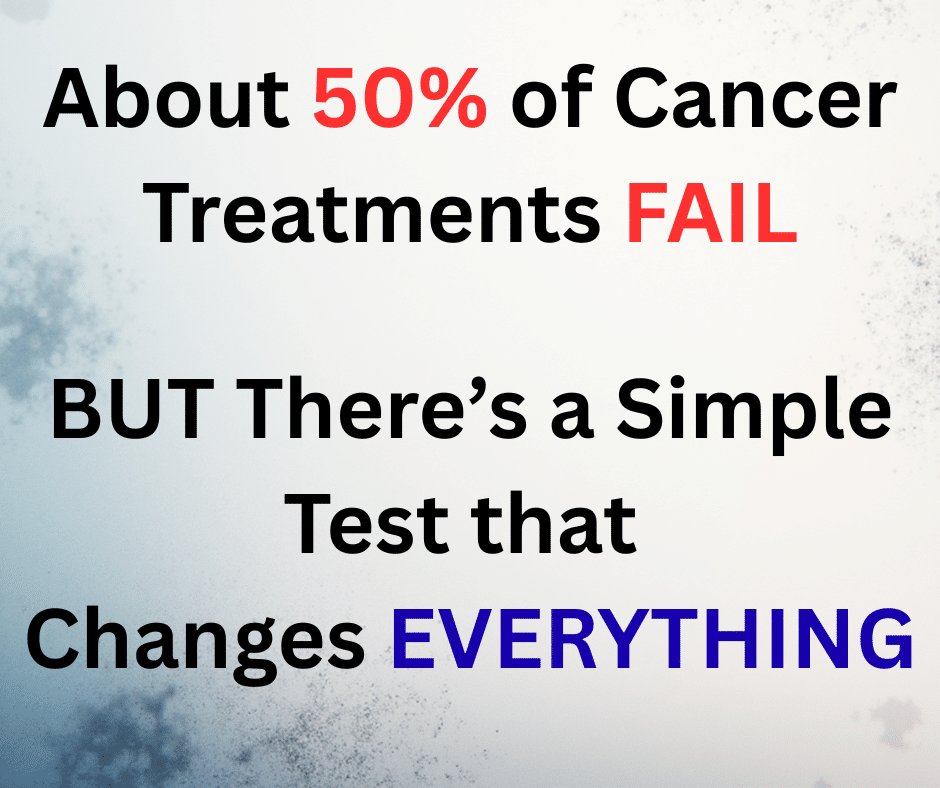
Here’s a startling truth that most cancer patients never learn: approximately 50% of first-line cancer treatments fail. That’s right—half of all patients who begin their cancer journey receive a treatment that won’t work for their specific tumor. They endure weeks or months of devastating side effects, financial strain, and psychological trauma, all while their disease potentially progresses.
But here’s what’s even more shocking: there’s technology available right now that can predict which treatments will work for your unique cancer before you ever take a single dose.
The Hidden Crisis in Cancer Care
When you’re diagnosed with cancer, time becomes your most precious resource. Every day matters. Every week counts. Yet our current system operates on a trial-and-error approach that wastes both.
Standard cancer treatment follows established protocols based on your cancer type and stage. If you have Stage II colon cancer, you’ll likely receive the same treatment as thousands of other Stage II colon cancer patients. But here’s the problem: your cancer isn’t the same as anyone else’s.
The Current “One-Size-Fits-All” approach to cancer treatment and it’s over 50% failure rate just isn’t good enough
Cancer is profoundly personal. Your tumor has its own unique genetic mutations, its own biochemical signature, its own vulnerabilities and resistances. What works for another patient with “the same” cancer may be completely ineffective for you—or worse, it may allow your disease to progress while you’re enduring toxic side effects that serve no purpose.
When a first-line treatment fails, the consequences cascade:
- Time lost: 2-6 months (sometimes longer) trying an ineffective treatment
- Disease progression: Your cancer continues growing and potentially spreading
- Devastating side effects: Hair loss, nausea, fatigue, nerve damage, organ stress—all for nothing
- Financial devastation: Tens or hundreds of thousands of dollars spent on treatments that don’t work
- Psychological toll: The emotional trauma of failed treatment and mounting fear
- Reduced future options: Some tumors develop resistance mechanisms that make subsequent treatments less effective
The Technology That’s Changing Everything
Imagine if, immediately after your biopsy, your actual tumor cells could be tested against 300 FDA-approved cancer treatments in a laboratory. Imagine knowing—before you start treatment—which drugs your cancer is vulnerable to and which ones it will resist.
This isn’t science fiction. This technology exists today.
Through advanced drug effectiveness testing, your preserved tumor tissue or malignant fluid can be exposed to hundreds of different treatment options. Scientists can observe in real-time how your specific cancer cells respond to each drug, identifying the most effective options for your unique disease.
The process works like this:
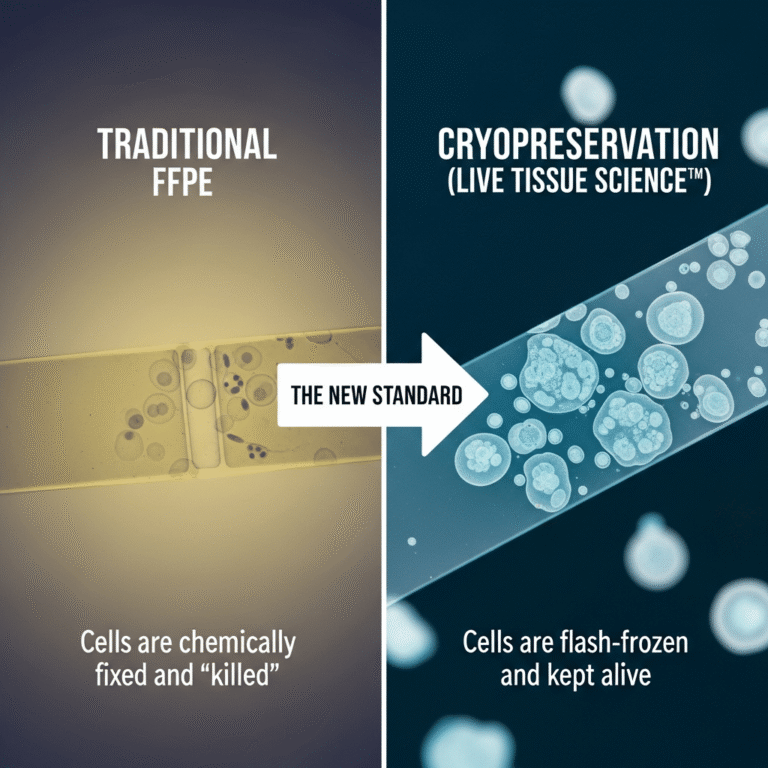
- Preservation: During your biopsy or surgery, a portion of your tumor tissue or malignant fluid is properly cryopreserved (frozen using specialized techniques that keep cells viable)
- Testing: Your living tumor cells are exposed to up to 300 FDA-approved cancer treatments
- Analysis: Researchers measure which treatments most effectively kill your cancer cells and identify resistance patterns
- Personalized treatment plan: Your oncologist receives detailed results showing which treatments are most likely to succeed
The difference between standard care and drug effectiveness testing is the difference between throwing darts blindfolded versus having a detailed map to your target.
Why Aren’t Patients Being Told?
If this technology can prevent treatment failures, save time, reduce unnecessary suffering, and potentially save lives, why isn’t every cancer patient being offered these tests?
The answer is complex and frustrating. It involves institutional inertia, insurance coverage gaps, lack of awareness among community oncologists, and the slow pace of medical system change. Many hospitals and cancer centers continue operating under “the way we’ve always done it,” even when better options exist.
But some of the top cancer doctors in the United States are already using these tests—and their patients are benefiting dramatically. Leading oncologists at premier cancer centers have recognized that personalized drug testing represents a paradigm shift in cancer care. They’ve seen firsthand how testing can:
- Eliminate months of trial-and-error treatment
- Avoid unnecessary side effects from ineffective drugs
- Prevent disease progression during failed treatment attempts
- Identify unexpected treatment opportunities
- Improve overall survival rates and quality of life
These forward-thinking physicians understand that generic treatment protocols, while useful as guidelines, often fail individual patients. They’re advocating for their patients to have access to drug effectiveness testing before beginning treatment.
The Critical Window: Why Timing Matters
Here’s what most patients don’t realize: you have one optimal chance to preserve your tumor tissue for testing, and that chance is at the time of your initial biopsy or surgery.
Once that tissue is removed from your body, it must be immediately and properly preserved. Standard pathology processing destroys the cellular integrity needed for drug testing. If your tissue isn’t cryopreserved correctly at the moment of removal, the opportunity may be lost forever.
This is why planning ahead is crucial. If you’re scheduled for a biopsy or surgery, you need to arrange for specialized biospecimen management before the procedure. Waiting until after your tissue has been processed in the standard manner may mean you’ve missed your window.
Real Solutions: Comprehensive Biospecimen Management
The good news is that comprehensive services exist to handle every aspect of this process. Specicare offers end-to-end biospecimen management designed specifically for cancer patients who want access to drug effectiveness testing:
Coordination with your medical team: Specicare works directly with your surgeons and oncologists to ensure proper specimen collection
Specialized transportation: Medical couriers trained in biospecimen handling transport your tissue under precisely controlled conditions
Expert cryopreservation: Using advanced techniques, your tumor tissue is cryopreserved in a way that maintains cellular viability for testing
Drug effectiveness testing: Your specimens are tested against comprehensive panels of FDA-approved treatments
Long-term cryo-storage: Your biospecimens remain preserved and available for future testing as new treatments emerge
Clinical trial matching: Access to databases of relevant clinical trials that may offer additional treatment options
This comprehensive approach removes the burden from patients and families during an already overwhelming time. Instead of trying to coordinate between multiple providers, pathologists, testing laboratories, and storage facilities, a single organization manages the entire process seamlessly.
The Cost of Waiting vs. The Cost of Acting
Some patients hesitate because of concerns about cost. But consider the economics:
A single round of failed chemotherapy can cost $100,000-$300,000 or more. That doesn’t include the indirect costs: lost work time, travel to appointments, medications to manage side effects, and the potential need for more aggressive (and expensive) treatments if the cancer progresses.
Drug effectiveness testing represents a small fraction of total cancer treatment costs—but it’s an investment made at the front end that can potentially save enormous expenses, suffering, and time down the line.
More importantly, how do you measure the value of avoiding three months of devastating chemotherapy side effects that serve no therapeutic purpose? How do you quantify starting with the right treatment immediately instead of watching your disease progress while trying drugs that won’t work?
What You Need to Do Now
If you or a loved one has been diagnosed with cancer, or if you’re scheduled for a biopsy, here’s what you need to do:
1. Talk to your oncologist immediately about drug effectiveness testing. Ask whether they’re familiar with these services and whether they’d incorporate results into your treatment planning. Many oncologists welcome this information—they simply haven’t been trained to proactively offer it.
2. Contact biospecimen management services before your biopsy or surgery. Organizations like scottrece.mtsdevs.com/ can coordinate with your medical team to ensure proper specimen collection and preservation. This must happen at the time of tissue removal—you can't go back and recover tissue later.
3. Advocate for yourself. The medical system won’t always offer you every available option. You have to ask questions, seek information, and insist on access to testing that could dramatically impact your treatment outcomes.
4. Don’t wait. Every day between diagnosis and effective treatment matters in cancer care. The time to arrange for drug effectiveness testing is now, not after you’ve already started treatment.
The Future of Cancer Care Is Personal
We’re living in an era where cancer treatment is becoming increasingly personalized. Genomic testing, immunotherapy, targeted treatments—all of these advances recognize that cancer is not a one-size-fits-all disease.
Drug effectiveness testing is the logical extension of this personalized approach. Instead of assuming that you’ll respond to a treatment because statistics say 50-60% of patients do, we can test whether your cancer will respond before you ever take the drug.
The tragedy is that this technology exists today, but most patients never learn about it. They’re never told they have options beyond the standard protocol. They endure failed treatments, unnecessary suffering, and disease progression—all preventable with proper planning and access to advanced testing.
Don’t let yourself become another statistic in the 50% of patients whose first treatment fails.
The choice is yours. You can follow the standard path and hope you’re in the lucky half who respond to first-line treatment. Or you can take control of your cancer journey with drug effectiveness testing that provides a personalized roadmap to the treatments most likely to work for your unique disease.
Your cancer is unique. Your treatment should be too.
To learn more about comprehensive biospecimen management, drug effectiveness testing, and taking control of your cancer treatment journey, visit scottrece.mtsdevs.com/. Your future self will thank you for acting now.